Choosing Your Beans VFFS Packing Machine: A Comprehensive Guide to Key Factors
- Share
- Issue Time
- Jun 24,2026
Summary
Choosing the right Vertical Form-Fill-Seal (VFFS) packing machine for bean products is a critical strategic decision impacting product freshness, operational efficiency, and overall profitability. This comprehensive guide outlines the key factors for selecting an optimal VFFS machine, highlighting that it is a cornerstone for long-term success.
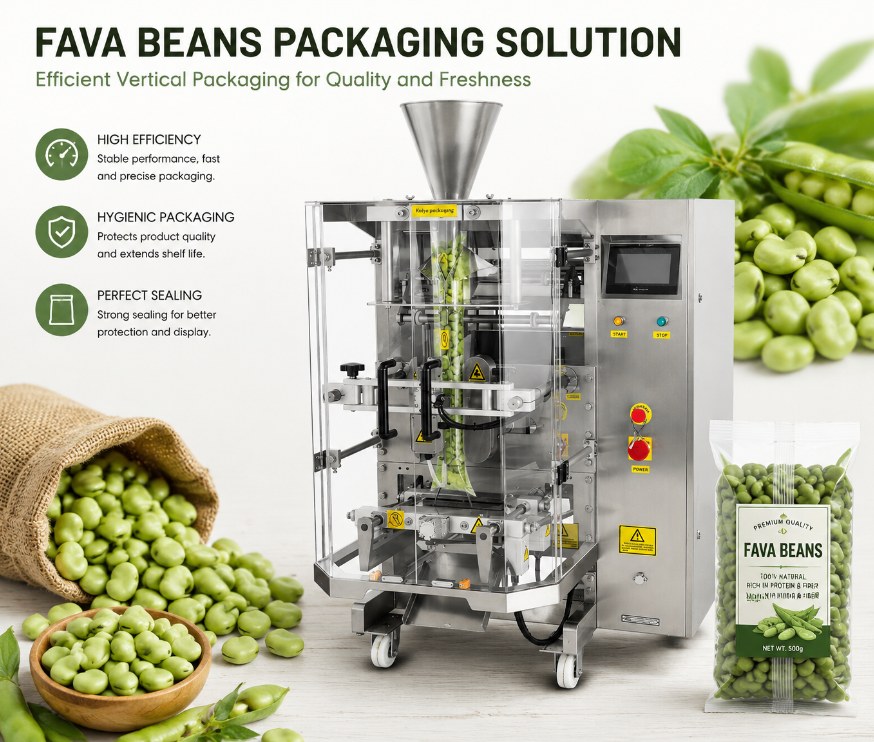
Choosing Your Beans VFFS Packing Machine: A Comprehensive Guide to Key Factors
Making the decision to invest in a new packaging machine for your bean products is a significant step that influences everything from product freshness and brand perception to operational efficiency and profitability. This guide will walk you through the most crucial factors to consider when selecting the perfect Vertical Form-Fill-Seal (VFFS) packing machine, ensuring your beans are packaged expertly and efficiently every single time. A well-chosen VFFS Packing Machine is not just a piece of equipment; it's a cornerstone of your production line and a key to long-term success.
Key Takeaways
- Understand the Fundamentals: A VFFS machine automates the process of forming a bag from a film roll, filling it with your beans, and sealing it, all in a continuous vertical motion. This brings immense benefits in speed, consistency, and space savings compared to manual or semi-automatic methods.
- Prioritize Freshness: For products like coffee and other beans, preserving freshness is non-negotiable. Key features to look for are gas flushing (Modified Atmosphere Packaging) to remove oxygen and one-way degassing valves that allow CO2 to escape without letting oxygen in, preventing bag bursting and flavor degradation.
- Maximize Efficiency: Machine performance is measured by its run rate (Bags Per Minute), filling accuracy, and ease of maintenance. Investing in a machine with high-precision fillers like multihead weighers and a design that facilitates quick cleaning and changeovers will minimize downtime and product giveaway, directly boosting your bottom line.
- Evaluate Long-Term Value: The true cost of a machine extends beyond the initial purchase price. Consider the Total Cost of Ownership (TCO), which includes maintenance, spare parts, and energy consumption. Crucially, reliable after-sales support and the machine's ability to scale with your business (future-proofing) are invaluable assets that ensure a strong Return on Investment (ROI).
- Choose a Reliable Partner: The manufacturer's reputation, availability of technical support, and the quality of their after-sales service are as important as the machine's technical specifications. A strong partnership ensures you have support throughout the machine's lifecycle.
Understanding Your Beans VFFS Packing Machine Fundamentals
A Vertical Form Fill Seal (VFFS) machine is an automated packaging system that accomplishes three primary tasks in a single, continuous vertical sequence: it creates a bag from a flat roll of film, fills the bag with a product, and then seals it. This vertical operation is highly efficient and saves significant floor space, making it a popular solution across numerous industries for packaging a wide array of products.
Why Consider a Beans VFFS Packing Machine?
Switching to a Beans Packing Machine is a strategic move for any growing business, especially for products like coffee or dried beans. The reasons are compelling and directly impact your operational efficiency and product quality. Manual packaging can be incredibly time-consuming; demonstrations have shown that a VFFS machine can package over 600 lbs of coffee in 1.5 hours, a task that could take six hours by hand.
Key benefits include:
- Speed and Efficiency: Modern VFFS machines can operate at remarkable speeds, ranging from 30 to over 300 bags per minute (BPM), drastically increasing throughput compared to manual methods. This automation reduces the need for extensive manual labor, freeing up your team to focus on other critical tasks.
- Consistency and Professionalism: An automated system ensures every bag is filled with the same precise amount of product and sealed uniformly. This consistency is crucial for brand image and customer trust. The final package is clean, professional, and ready for retail shelves.
- Space-Saving Design: As the name suggests, the vertical orientation of these machines minimizes the floor space required, a significant advantage for facilities with limited room.
- Versatility: A single machine can often be adapted to produce various bag sizes and styles by simply changing the forming tube and adjusting settings. This adaptability is invaluable for businesses with diverse product lines or future growth plans.
- Reduced Waste: VFFS machines offer precise control over film usage, with some systems generating as little as 0.5% packaging waste, which enhances a brand's eco-friendly credentials.
How Our Beans VFFS Packing Machine Operates
Understanding the operational flow of a VFFS machine demystifies the process and highlights the precision involved. The entire workflow is a seamless, synchronized cycle that can be broken down into a few core steps:
Film Unwinding and Transport: The process starts with a large roll of flat packaging film mounted on a spindle. A film transport system, often using servo-driven belts, unwinds the film and pulls it through a series of rollers that maintain proper tension and alignment, preventing wrinkles. For pre-printed films, registration sensors ensure that graphics are perfectly aligned on each bag.
Bag Forming: The flat film is guided over a uniquely shaped component called a forming tube or collar. This device shapes the film into a vertical tube. As the film wraps around the tube, the two outer edges of the film overlap to prepare for the back seal.
Vertical and Bottom Sealing: Heated sealing bars clamp together to fuse the overlapping edges, creating a continuous vertical seam down the back of the tube. Immediately after, a pair of horizontal sealing jaws close to create the bottom seal of one bag and simultaneously form the top seal of the preceding bag. The design of these seals is critical for package integrity.
Product Filling: Positioned directly above the forming tube is the filling system (the doser). This could be a multi-head weigher for whole beans or an auger filler for ground coffee. In sync with the bag's creation, the filler drops a precise, pre-measured amount of product down the forming tube and into the waiting bag.
Top Sealing and Cutting: Once the bag is filled, the same horizontal sealing jaws close again to create the top seal. A sharp knife, often integrated into the jaw assembly, then cuts the completed bag from the continuous film tube, separating it into an individual package.
Discharge: The finished, sealed bag drops onto a conveyor belt or into a collection bin, ready for casing, cartoning, and shipping. This entire cycle repeats continuously at high speed, ensuring a rapid and efficient packaging process.
Ensuring Freshness and Quality with Your Beans VFFS Packing Machine
For products like coffee beans, maintaining freshness is paramount. The journey from roaster to consumer is fraught with elements that can degrade quality, with oxygen being the primary culprit. A high-quality Beans VFFS Packing Machine incorporates specific technologies to protect your product's flavor, aroma, and shelf life.
Gas Flushing for Optimal Freshness
Gas flushing, also known as Modified Atmosphere Packaging (MAP), is a crucial feature for preserving bean quality. The process involves actively displacing the oxygen inside the bag with an inert gas—most commonly nitrogen—just before the final seal is made. Oxygen is the enemy of freshness; it causes oxidative deterioration, leading to stale flavors and loss of aroma.
Here's how it works in a VFFS machine:
- As the product is dropped into the formed bag, a nozzle injects a stream of nitrogen.
- Because nitrogen is denser than oxygen, it pushes the ambient air and oxygen out of the bag.
- The bag is then immediately sealed, trapping the protective, oxygen-free nitrogen atmosphere inside.
This simple-sounding process has profound benefits. By reducing residual oxygen levels to less than 3% (with advanced systems achieving below 1%), MAP significantly slows down spoilage from aerobic microorganisms and delays oxidation. This not only extends the product's shelf life but also protects its color, taste, and texture, ensuring the customer experiences the product as you intended. For some fragile products, the gas also creates a "pillow pack," a cushioned buffer that protects against damage during transit.
The Essential Coffee Degassing Valve
Freshly roasted coffee beans present a unique packaging challenge: they release significant amounts of carbon dioxide (CO2) for days or even weeks after roasting. This process is called degassing. If this CO2 is trapped in an airtight bag, the pressure can build up until the bag inflates, swells, and eventually bursts, creating a mess and ruining the product.
This is where the one-way degassing valve becomes indispensable. This small but brilliant component is a one-way vent applied to the bag.
- It lets gas out: The valve allows the CO2 released by the beans to escape. This prevents the bag from puffing up or bursting, maintaining its intended shape and structural integrity on the shelf.
- It keeps oxygen from getting in: Crucially, the valve is a one-way system. It prevents oxygen from the outside atmosphere from entering the bag, which would cause the coffee to go stale.
By allowing roasters to package their coffee almost immediately after roasting without waiting for the degassing process to complete, these valves increase packaging efficiency. A modern VFFS machine can be equipped with a valve applicator unit that automatically applies these valves to the film at high speed, seamlessly integrating this essential feature into the packaging process. Ultimately, the degassing valve is vital for preserving the coffee's rich aroma and deep flavor until it's brewed.
High-Quality Seals and Appearance
The final presentation of your product is your brand's handshake with the customer. A flimsy, poorly sealed, or unattractive package can signal low quality, regardless of how good the beans inside are. A premium Beans VFFS Packing Machine ensures both the integrity of the seal and the aesthetic appeal of the package.
Seal Quality: A strong, hermetic (airtight) seal is non-negotiable. It's the final barrier protecting your product from oxygen, moisture, and other contaminants. VFFS machines achieve this through a controlled combination of heat, pressure, and dwell time applied by the sealing jaws. Common types of vertical seals include:
- Fin Seal: The insides of the film edges are sealed together, creating a "fin" that sticks out from the back of the bag.
- Lap Seal: One edge of the film overlaps the other, and the inner side of one is sealed to the outer side of the other. This uses slightly less film but requires the film's inner and outer layers to be compatible for sealing.
Weak or inconsistent seals are a common operational issue, often stemming from improper calibration. A well-designed machine provides precise control over sealing parameters to ensure a perfect, gas-tight seal every time, preserving freshness and preventing leaks.
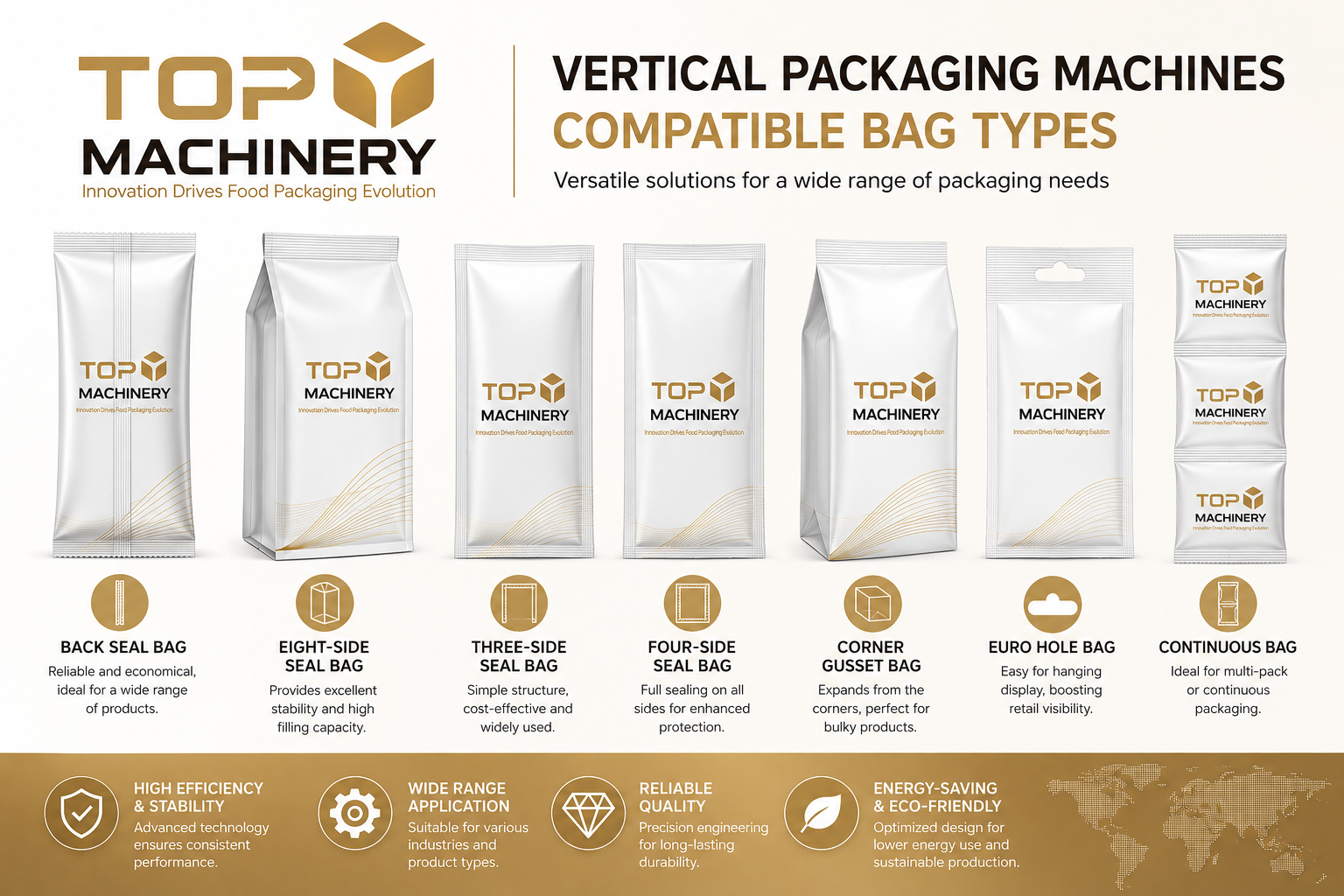
Package Appearance: Beyond the seal, the overall look of the bag matters. A superior machine produces clean, well-formed bags that stand up straight and command attention. VFFS machines can be configured to create various popular bag styles for beans, including:
- Pillow Bags: The most basic and cost-effective bag style.
- Gusseted Bags: Bags with sides that are tucked in and folded, allowing the bag to stand on its own when filled.
- Quad Seal / Stabilo Bags: These have seals on all four corners, creating a sturdy, box-like shape that is very stable and offers premium, flat surfaces for branding.
The ability to produce these appealing bag formats, combined with a flawless seal, reinforces the premium quality of the product within.
Maximizing Efficiency and Performance from Your Beans VFFS Packing Machine
Beyond preserving freshness, the primary reason to invest in a VFFS machine is to dramatically improve production efficiency. Performance is a multi-faceted metric, encompassing speed, accuracy, and uptime. Each of these elements contributes directly to your operational throughput and, ultimately, your profitability.
Optimizing Run Rate and Production Speed
The most common benchmark for a packaging machine's performance is its "run rate" or "cycling speed," typically measured in Bags Per Minute (BPM). Modern VFFS machines offer a wide range of speeds, from entry-level models running at 40 BPM to high-speed, continuous-motion systems that can exceed 200 BPM.
Several factors influence the achievable run rate:
- Machine Motion Type:
- Intermittent Motion: The film stops momentarily for the sealing jaws to close, seal, and cut. This is excellent for precision and flexibility but is inherently slower.
- Continuous Motion: The film never stops moving. The sealing jaws move with the film in a sophisticated motion to seal and cut on the fly, allowing for much higher speeds.
- Product & Bag Size: Larger bags require more film and more product, naturally taking longer to form and fill. The characteristics of the beans (e.g., density, flowability) also play a role.
- Film Type: Thicker or more complex film materials may require longer dwell times for the heat to penetrate and create a strong seal, which can limit speed.
- Machine Drive System: Servo-driven machines offer more precise, faster, and more repeatable control over film movement and jaw motion compared to older pneumatic or mechanical systems, enabling higher and more consistent speeds.
While maximizing BPM is tempting, the goal should be to find the optimal balance between speed and quality. Running a machine faster than it can produce reliable seals or accurate weights will only lead to increased waste and rework, negating any gains in speed.
Accurate Filling for Granular Products
For any business selling by weight, filling accuracy is critical to profitability. Every granule of product you give away for free by overfilling a bag eats directly into your profit margin. Conversely, underfilling can lead to customer dissatisfaction and potential legal issues. A key function of an integrated VFFS system is to ensure consistent and accurate dosing.
For bean products, two types of fillers are most common:
- Auger Fillers: Best suited for ground products like coffee. An auger is a large screw-like device that rotates a specific number of times to dispense a precise volume of powder into each bag.
- Multihead Weighers: The gold standard for whole-bean coffee and other granular or irregularly shaped products. A multihead weigher uses a sophisticated system of multiple small buckets (weigh heads) on load cells. A computer calculates the combination of buckets that comes closest to the target weight without being under, then dumps them simultaneously. This system is incredibly fast and provides unmatched accuracy, often to within a fraction of a gram.
Integrating a high-precision filler with your VFFS machine is a cornerstone of an efficient packaging line. It minimizes "product giveaway," ensuring that you are selling what you intend to sell, which has a massive impact on ROI over the machine's lifetime.
Easy Cleaning and Low Maintenance Needs
Downtime is the enemy of production. A machine that is difficult to clean, requires frequent maintenance, or has hard-to-reach parts can spend more time being serviced than producing. When selecting a VFFS machine, always evaluate it for ease of cleaning and maintenance. A sanitary design is not just for hygiene; it's for efficiency.
Look for these features:
- Sanitary Design: Machines built for food products should feature stainless steel construction, especially on all product-contact parts. Surfaces should be smooth, welds should be ground and polished, and there should be minimal flat surfaces or crevices where product dust can accumulate. Some designs even feature sloped surfaces and frames made from rotated tubes to facilitate C and product shedding.
- Accessibility: Ask yourself, "If you can't see it, can you clean it?" The machine should have an open, accessible design. Key components like the forming tube, sealing jaws, and pull belts should be easy to access without tools. Many modern machines offer "tool-less" removal of these parts for quick and thorough cleaning.
- Washdown Capability: For certain environments, a full "washdown" machine is necessary. These are built to withstand being hosed down for cleaning, with sealed electronics and motors. The level of sanitation required (e.g., standard stainless, washdown, USDA/3-A) will depend on your specific product and cleaning protocols.
- Preventive Maintenance: A good machine is designed to make routine maintenance simple. This includes easy lubrication points, quick-change wear parts like belts and blades, and clear guides for daily, weekly, and monthly checks.
Investing in a machine that is easy to clean and maintain will pay dividends by minimizing unplanned downtime, reducing labor costs for sanitation, and ensuring your line is running smoothly shift after shift.
The Long-Term Value of Your Beans VFFS Packing Machine Investment
Purchasing a VFFS machine is a significant capital investment. However, the initial price tag is just one part of the story. The true value of this investment unfolds over its entire lifespan and is heavily influenced by factors like after-sales support, overall cost-effectiveness, and its ability to adapt to your company's growth.
Importance of After-Sales Support
A VFFS machine is a complex piece of equipment. Even the most reliable machine will require service, spare parts, and operator training over its life. The quality of the manufacturer's after-sales support can be the difference between a minor hiccup and a costly, production-halting shutdown.
When evaluating a provider, consider the following:
- Technical Support: Is there a dedicated team of technicians available to help troubleshoot issues over the phone or via video call? Is support available 24/7, or only during business hours?
- Spare Parts Availability: How quickly can you get critical spare parts? A manufacturer with a well-stocked inventory of OEM (Original Equipment Manufacturer) parts can ship them overnight, whereas waiting for parts from overseas can paralyze your operations for days or weeks.
- Field Service: Do they have a network of skilled technicians who can be dispatched to your facility for installation, training, and complex repairs?
- Training: Proper operator training is crucial for maximizing efficiency and preventing user error, one of the leading causes of downtime. A good partner will offer comprehensive training during installation and as needed thereafter.
Choosing a reliable partner like TOP Y MACHINERY is crucial for ensuring you receive excellent after-sales support. A cheaper machine from a supplier with non-existent support often proves to be a far more expensive and frustrating investment in the long run.
Considering Total Cost and ROI
Smart business decisions are based on data, and the two most important financial metrics for a capital investment are Total Cost of Ownership (TCO) and Return on Investment (ROI).
Total Cost of Ownership (TCO): This metric provides a holistic view of what the machine will cost over its entire lifecycle. It extends far beyond the initial purchase price. The TCO includes:
- Acquisition Cost: The price of the machine, plus freight, installation, and commissioning fees.
- Operating Costs: Daily expenses like electricity, compressed air, and labor to run the machine.
- Maintenance Costs: The cost of scheduled preventive maintenance, spare parts, and any unexpected repairs.
- Consumables: The cost of packaging film and other materials.
Return on Investment (ROI): This metric calculates the profitability of your investment. It measures how much value the machine generates compared to its cost. The basic formula is: ROI = (Net Profit / Total Investment Cost) x 100%. The "Net Profit" or "gain from investment" is calculated from cost savings and increased revenue, such as:
- Labor Savings: Reduced need for manual packers.
- Increased Throughput: The ability to produce and sell more products per hour.
- Reduced Product Giveaway: Savings from improved filling accuracy.
- Minimized Material Waste: Savings from efficient film usage.
By calculating the TCO and projecting the ROI, you can make a decision based on long-term value, not just short-term price. A machine with a higher initial cost but lower TCO and higher ROI is almost always the smarter financial choice.
Future-Proofing for Business Growth
Your business today is not the business you plan to be in five or ten years. A truly valuable VFFS machine is one that can grow and adapt with you. This concept of "future-proofing" or scalability is a critical component of a long-term investment strategy.
Consider the following to ensure your machine is a growth enabler, not a bottleneck:
- Modularity and Upgradability: Look for a machine with a modular design. Can you easily add new features later, such as a zipper applicator, a different type of filler, or a gas-flushing system, without having to buy a whole new machine?
- Flexibility in Bag Styles and Sizes: How difficult is it to change from one bag size to another? A machine with quick, tool-less changeovers for forming tubes and film rolls will allow you to adapt to new product launches or customer requests efficiently. The ability to run multiple bag styles (e.g., pillow, gusseted, quad seal) on one machine offers immense flexibility.
- Scalable Speed: Does the machine have the capacity to run faster than your current needs? A machine that can start at 60 BPM but is capable of 100 BPM gives you room to increase production as demand grows.
- Integration: Ensure the machine can easily integrate with other upstream and downstream equipment, such as feeders, checkweighers, case packers, and palletizers. This is key to building a fully automated, scalable production line.
Investing in a scalable packaging solution ensures that as your order volumes increase and your product lines diversify, your packaging operations can keep pace without requiring a complete and costly overhaul.
Frequently Asked Questions (FAQ)
1. What is the main difference between a multihead weigher and an auger filler for beans? A multihead weigher is ideal for whole-bean coffee and other solid, granular products. It uses a series of small weighing buckets to combine and dispense a highly accurate weight of the product, minimizing giveaway. An auger filler is best for powders and fine granules, like ground coffee. It uses a rotating screw to dispense a specific volume of product. For whole beans, a multihead weigher is the superior choice for accuracy and product integrity.
2. How much does a Beans VFFS Packing Machine cost? The price of a VFFS machine can vary dramatically, from tens of thousands to several hundred thousand dollars. The cost depends on factors like speed (intermittent vs. continuous motion), size, level of sanitation (stainless steel vs. washdown), the complexity of the integrated filler (auger vs. multihead weigher), and additional features like gas flushing or valve applicators. It's crucial to consider the Total Cost of Ownership (TCO) and potential ROI, not just the initial purchase price.
3. Can one VFFS machine handle both whole beans and ground coffee? Yes, but it typically requires different filling systems. A machine can be designed to accommodate interchangeable fillers. You could use a multihead weigher for whole beans and then swap it out for an auger filler for ground coffee. While technically possible, changeovers between such different systems can be time-consuming. For high-volume operations, it is often more efficient to have dedicated lines for each product type.
4. What is Modified Atmosphere Packaging (MAP) and why is it important for coffee? Modified Atmosphere Packaging (MAP), also known as gas flushing, is the process of replacing the oxygen in a package with an inert gas, usually nitrogen, before sealing. Oxygen is a primary cause of spoilage in coffee, leading to staling and loss of flavor. By removing oxygen, MAP significantly extends the shelf life of the beans and preserves their delicate aroma and taste.
5. How difficult is it to maintain a VFFS machine? Modern VFFS machines are designed to simplify maintenance. Routine tasks involve daily cleaning of product contact parts, checking for film residue on sealing jaws, and ensuring sensors are clean. Weekly and monthly schedules typically include lubricating moving parts, inspecting wear items like belts and knives, and checking pneumatic and electrical systems. Choosing a machine with an open, sanitary design and tool-less changeover parts makes these tasks much quicker and easier, minimizing downtime.
Conclusion
Selecting the right Beans VFFS Packing Machine is undeniably a strategic decision with far-reaching implications for your product quality, operational efficiency, and overall profitability. As we've explored, this choice goes far beyond a simple price comparison.
By carefully considering the crucial factors—from essentials like gas flushing and high-integrity seals that guarantee freshness, to performance metrics like run rate and filling accuracy that drive efficiency—you can make an informed choice. Equally important is looking at the long-term picture: evaluating the total cost of ownership, insisting on robust after-sales support, and selecting a machine that can scale with your ambitions. By taking this comprehensive approach, you can confidently invest in a packaging solution that not only meets your needs today but also serves as a pillar for your business's continued success and growth in the years to come. We encourage you to share this guide with your team and start the conversation about your next strategic investment.