How to Select the Ideal Frozen Food VFFS Packing Machine for Your Production Needs.
- Share
- Issue Time
- Jul 17,2026
Summary
Selecting the appropriate commercial food packaging machine is paramount for frozen food producers, impacting brand identity, operational efficiency, and overall profitability. The article emphasizes that a carefully chosen Vertical Form Fill Seal (VFFS) packing machine is a strategic asset. VFFS technology automates the forming, filling, and sealing of bags in a continuous, vertical process, making it highly efficient for high-speed production lines, especially for Individually Quick Frozen (IQ
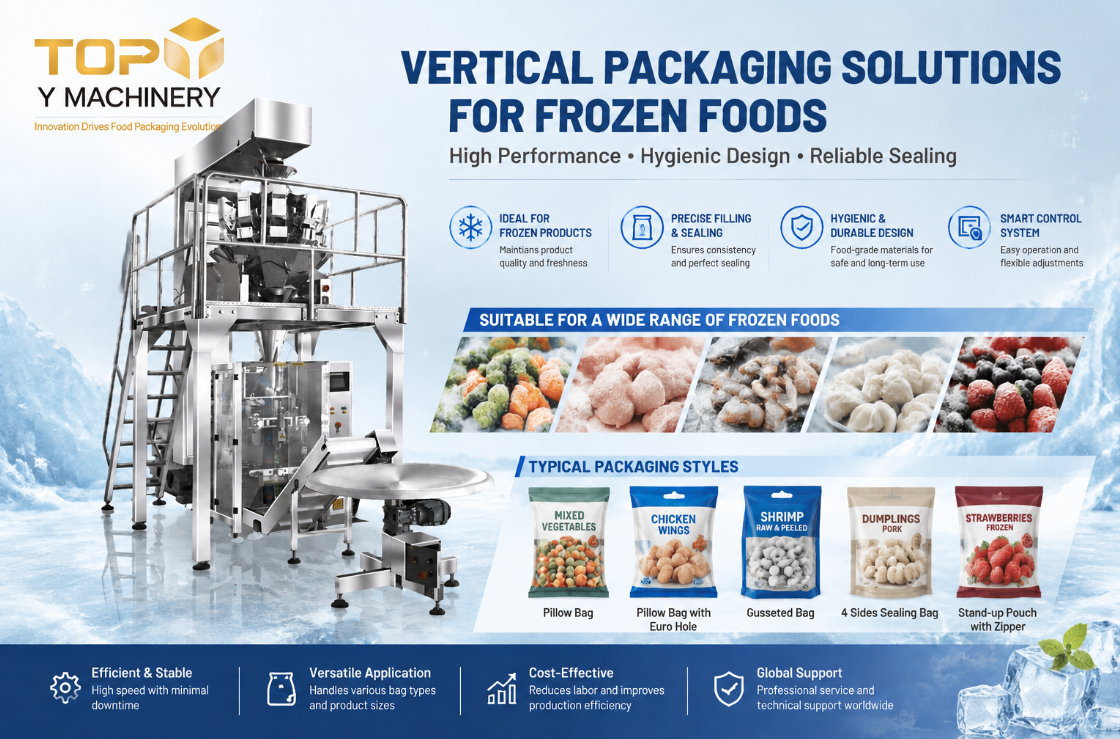
As a producer, I understand that packaging is far more than just a protective layer for our delicious frozen products; it represents a crucial component of our brand identity and overall business success. A thoughtfully selected commercial food packaging machine can lead to significant time savings, cost reductions, and an enhanced presentation of our products to the consumer. Today, we will explore the essential factors in selecting the perfect frozen food VFFS packing machine to meet your unique production requirements.
Key Takeaways
Choosing the right frozen food VFFS packing machine is a strategic decision that impacts efficiency, product quality, and profitability. Key considerations include the machine's core technology, compatibility with your specific products, and the long-term value it provides.
- Understand the Technology: Familiarize yourself with the vertical form-fill-seal process to appreciate its speed and efficiency. Differentiate between intermittent and continuous motion machines to match your output needs.
- Prioritize Product-Specific Features: The most crucial element is how the machine handles your product. Select the right filler (e.g., multi-head weigher for irregular items, auger for powders) to ensure accuracy and minimize waste.
- Evaluate Sealing and Material Handling: Ensure the machine creates strong, hermetic seals to prevent freezer burn and extend shelf life. Verify its compatibility with durable, cold-resistant packaging films like LLDPE.
- Assess Production Speed and Integration: Calculate your required bags per minute (BPM) and choose a machine that can meet current and future demand. Plan for seamless integration with your existing upstream and downstream equipment.
- Look Beyond the Price Tag: Analyze the Total Cost of Ownership (TCO), including maintenance, changeovers, and potential downtime. A reliable supplier offering robust after-sales support and customization is a more valuable long-term partner than one with just a low initial price.
Understanding the Core: What a Frozen Food VFFS Packing Machine Does for Us
Before diving into specifications and features, it’s essential to grasp the fundamental technology behind a Vertical Form Fill Seal (VFFS) machine and understand why it has become a cornerstone of the frozen food industry. This knowledge forms the basis for making an informed decision that aligns with our production goals.
The Mechanics of Vertical Form Fill Seal (VFFS) Technology
A Vertical Form Fill Seal machine automates three processes in one continuous, vertically-oriented sequence: bag forming, product filling, and bag sealing. The process begins with a large roll of flat packaging film, which is fed over a forming tube (sometimes called a forming collar or plow). As the film drapes over the shoulders of this tube, it is folded into a cylindrical shape.
At this point, a vertical sealing bar presses against the two outer edges of the film, creating the "vertical seal" and transforming the flat sheet into a tube. Next, a horizontal sealing jaw clamps the bottom of the tube, creating the bottom seal of the first bag while simultaneously forming the top seal of the preceeding bag. Once the bottom seal is in place, the product—in our case, frozen foods—is dropped from a filler (like a multi-head weigher) positioned above the forming tube, filling the newly formed bag. After the product is dispensed, the horizontal sealing jaw activates again to seal the top of the filled bag and cut it free, allowing it to drop onto a conveyor for downstream processing. This cycle repeats at high speed, making the VFFS packing machine an incredibly efficient packaging solution.
Why VFFS is Ideal for Our Frozen Food Products
The VFFS system offers several distinct advantages that make it particularly well-suited for the demanding environment of frozen food production. Firstly, its high-speed operation is a perfect match for the output of IQF (Individually Quick Frozen) processing lines, ensuring that packaging does not become a bottleneck. The vertical orientation is also beneficial as it utilizes gravity to help settle products inside the bag, which works especially well for free-flowing items like frozen peas, corn, French fries, and chicken nuggets.
Furthermore, the integrity of the packaging is paramount for frozen goods to prevent issues like freezer burn and contamination. VFFS machines are capable of creating strong, hermetic seals that protect the product from moisture and air, preserving its quality and extending its shelf life from the production line to the consumer's freezer. The enclosed nature of the process also enhances hygiene, a critical factor in food packaging. Finally, the compact vertical footprint of these machines helps save valuable floor space in production facilities, a significant consideration for many operators.
Key Features to Look for in a High-Performance Frozen Food VFFS Packing Machine
When evaluating different models, certain features are non-negotiable for achieving efficiency, product integrity, and presentation. A high-performance machine goes beyond basic operation, offering precision and reliability tailored to the unique challenges of frozen products.
Precision Filling Systems for Our Frozen Items
The filler is the heart of the packaging operation, as it determines dosing accuracy, speed, and how gently your product is handled. For frozen foods, which are often irregular in shape and weight, the multi-head weigher is the industry standard. It uses a series of weigh buckets to calculate the perfect combination of product to achieve the target weight with remarkable accuracy, minimizing product giveaway and ensuring compliance with net weight regulations.
Other filler types include:
- Auger Fillers: Ideal for powders, granules, or very small, uniform frozen items like diced onions. They use a screw mechanism for precise volumetric dosing.
- Volumetric Cup Fillers: A cost-effective solution for free-flowing, consistent-sized products. However, they are less accurate for items with varying density and shapes.
- Linear Weighers: A simpler, less expensive version of a multi-head weigher, suitable for lower-speed production or semi-automatic lines.
For a producer of diverse frozen goods, a machine that can easily integrate with different filler types offers the greatest flexibility.
| Filler Type | Best For | Key Advantage | Consideration |
|---|---|---|---|
| Multi-Head Weigher | Irregular shapes (nuggets, fries, shrimp, mixed veg) | High accuracy, high speed, reduces waste | Higher initial investment |
| Auger Filler | Powders, fine granules (seasonings, small grains) | Excellent for non-free-flowing products | Not suitable for large or fragile items |
| Volumetric Cup Filler | Uniform, free-flowing items (peas, corn) | Cost-effective, simple operation | Lower accuracy for varied products |
Ensuring Our Products' Freshness and Shelf Life with VFFS
The primary job of the package is to protect the product. For frozen foods, this means creating an airtight barrier against the harsh freezer environment. Modern VFFS machines excel at creating robust hermetic seals that prevent moisture ingress and freezer burn. Look for machines with advanced sealing jaw technology (e.g., servo-driven, precise temperature control) that can consistently seal through potential product contamination in the seal area, a common issue with dusty or small-particle products.
To further extend shelf life and preserve color, flavor, and texture, consider a machine equipped for Modified Atmosphere Packaging (MAP). This process, also known as gas flushing, involves replacing the oxygen inside the bag with an inert gas, typically nitrogen, just before the final top seal is made. This slows down oxidative decay and inhibits the growth of aerobic microorganisms, keeping products like frozen fish and seasoned vegetables fresher for longer.
Material Compatibility and Bag Styles for Our Frozen Food VFFS Machine
The packaging film for frozen products must be durable enough to withstand freezing temperatures without becoming brittle or cracking. Common materials include Linear Low-Density Polyethylene (LLDPE), which offers excellent cold-flex properties, often laminated with other layers like PET or OPP for printability and strength. Your VFFS machine must be able to handle this type of film effectively, with sealing jaws that can apply the correct temperature, pressure, and dwell time to create a strong bond.
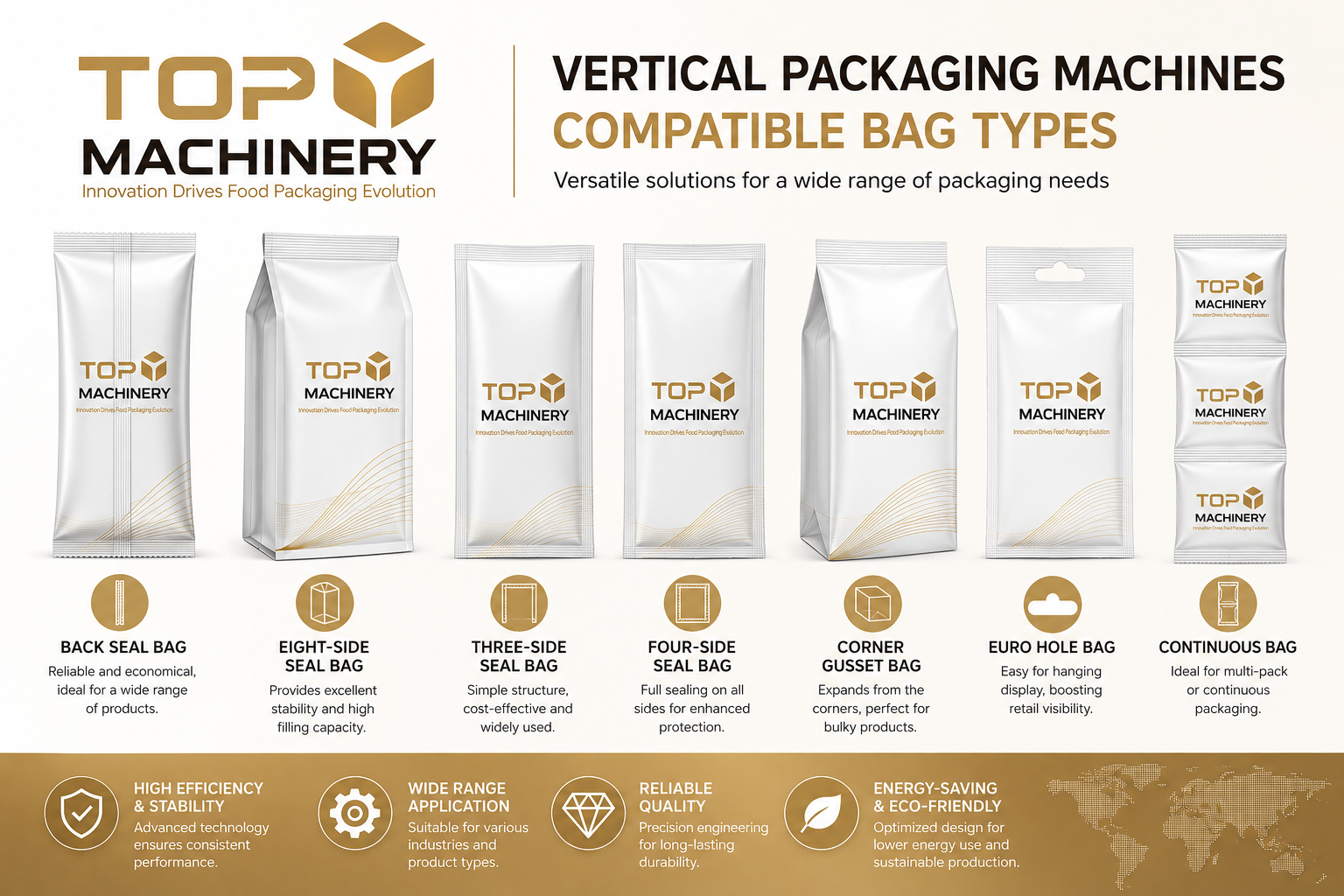
VFFS machines can also produce a variety of bag styles to meet different retail and marketing needs:
- Pillow Bag: The most common and cost-effective bag style, perfect for a wide range of products.
- Gusseted Bag: Features side gussets that allow the bag to hold more volume and can sometimes be squared off for better shelf presence.
- Block Bottom / Quad Seal Bag: These bags have four sealed corners and a flat bottom, allowing them to stand upright on shelves like a box. They offer a premium look and excellent branding real estate, making them ideal for high-value products.
Tailoring Our Choice: Matching a Frozen Food VFFS Packing Machine to Our Production Needs
A machine that is perfect for a small startup is likely unsuitable for a large-scale industrial operation. The ideal choice is one that not only fits your current processes but also supports your growth. This requires a careful assessment of your volume, product characteristics, and existing infrastructure.
Assessing Our Production Volume and Speed Requirements
Your production output is the primary determinant of the machine’s required speed, typically measured in Bags Per Minute (BPM). To calculate this, consider your hourly production target and divide it by 60. For example, if you need to package 6,000 bags per hour, you need a machine capable of at least 100 BPM.
This speed requirement will guide your choice between two main types of VFFS machines:
- Intermittent Motion: The film stops momentarily for each sealing and filling cycle. These machines are generally more affordable and are well-suited for lower-speed requirements (typically under 80 BPM). They offer high-quality seals due to the longer dwell time.
- Continuous Motion: The film moves continuously without stopping, with the sealing and cutting mechanisms moving along with the film to perform their functions. These machines achieve much higher speeds (often exceeding 200 BPM) and are the standard for high-volume operations where throughput is critical.
Considering the Specific Nature of Our Frozen Products
Not all frozen products are created equal. The unique characteristics of your items will dictate specific machine requirements.
- Fragile Products: Items like frozen raspberries, delicate pastries, or coated products require gentle handling. Look for machines with features that minimize the drop height from the weigher to the bag, such as specially designed transition funnels or a lower machine profile.
- Sticky Products: Glazed chicken wings, sauced pasta, or fruit with syrups can stick to machine surfaces, leading to inaccurate weighing and jams. A machine designed for these applications may use dimpled or Teflon-coated contact surfaces to ensure a smooth product flow.
- Sharp or Abrasive Products: Items with sharp edges, like bone-in meats or hard-shelled seafood, can puncture standard packaging film. While a stronger film is the first line of defense, the machine's handling should also be considered to minimize impact during the drop.
Integrating Our New Frozen Food VFFS Packing Machine with Existing Lines
A new packing machine rarely operates in isolation. It must function as part of a larger, integrated system. Consider both upstream and downstream equipment.
- Upstream: How will the product be fed to your VFFS machine’s filler? This could involve bucket elevators, vibratory feeder conveyors, or direct feeds from a freezer tunnel. Ensure the VFFS machine’s infeed and the filler’s capacity are matched to the output of your upstream process.
- Downstream: After packaging, bags need to be handled by other equipment. This typically includes a takeaway conveyor that moves bags to a checkweigher (to verify weight), a metal detector (for safety), and finally to a case packer or manual packing station. The chosen VFFS machine must have the correct discharge height and signaling capabilities to communicate seamlessly with this downstream machinery for a fully automated and efficient line.
Maximizing Our Investment: Budget, Customization, and Support for Our Frozen Food VFFS Packing Machine
The final step is to ensure your chosen machine represents a smart, long-term investment. This involves looking beyond the initial purchase price and considering the full financial picture, the machine's adaptability, and the reliability of the company you are partnering with.
Understanding Budgetary Considerations and Return on Investment (ROI)
The initial price of a frozen food VFFS packing machine can vary dramatically based on its speed, features, and level of automation. However, a savvy producer looks at the Total Cost of Ownership (TCO), not just the sticker price. TCO includes:
- Operating Costs: Energy consumption, film usage, and potential product giveaway from inaccurate filling.
- Maintenance Costs: The price and availability of spare parts, as well as the frequency of required service.
- Downtime Costs: The financial impact of every hour the machine is not running, which is influenced by its reliability and the speed of technical support.
- Labor Costs: An automated system can significantly reduce the manual labor required for packing, leading to substantial long-term savings.
Calculating the Return on Investment (ROI) involves weighing these costs against the gains in efficiency, waste reduction, and increased throughput. A more expensive, reliable, and accurate machine often provides a faster ROI than a cheaper alternative that suffers from frequent downtime and product giveaway.
The Value of Customization Options for Our Diverse Product Offerings
Your product line may evolve over time, and your packaging machine should be able to adapt. Modularity and customization are key to future-proofing your investment. Important customization options include:
- Multiple Forming Assemblies: The ability to quickly and easily change the forming tube and collar to produce different bag widths for various product SKUs.
- Integrated Printers: Options for Thermal Transfer Overprinters (TTO) or inkjet coders to print dates, lot codes, and barcodes directly onto the film.
- Quick-Change Sealing Jaws: Tool-less or quick-changeover jaws allow operators to switch between different bag styles or film types with minimal downtime.
- Specialized Add-ons: Features like gas flushing systems, hole punches for hanging retail bags, and gusseting devices can all be added to meet specific packaging requirements.
Why Supplier Reputation and After-Sales Support Matter for Our VFFS Machine
Your relationship with the machine manufacturer is a long-term partnership. A reputable supplier provides more than just a piece of equipment; they provide a support system for a critical part of your operation. When evaluating suppliers, ask about:
- After-Sales Support: What is their technical support availability? Do they offer remote diagnostics and on-site service? A machine that is down for days waiting for a technician can be catastrophic for production schedules.
- Spare Parts: Are common wear parts readily available and affordable? Long lead times for critical components are a major red flag.
- Training and Documentation: Does the supplier provide comprehensive training for your operators and maintenance staff? Clear, detailed manuals are essential for troubleshooting and routine upkeep.
- Factory Acceptance Test (FAT): A reputable manufacturer will encourage you to perform a FAT, where you can see your machine running with your specific product and film before it ever leaves their facility.
A strong supplier relationship is one of the best forms of insurance for your investment. If you have questions about what to look for in a machinery partner, please do not hesitate to Contact us for guidance.
Ultimately, selecting the right frozen food VFFS packing machine is a pivotal decision for our business's success. By carefully considering our product, production needs, and budget, we can ensure efficient packaging, satisfied customers, and a positive return on our investment. Investing time upfront to evaluate these factors will empower us to streamline our processes and ensure our frozen delights reach consumers in perfect condition. To explore a range of machine options and specifications, feel free to Download the catalog.
Frequently Asked Questions (FAQ)
Q1: What is the main difference between an intermittent motion and a continuous motion VFFS machine? A: The primary difference is how the film moves. On an intermittent motion machine, the film stops for each sealing cycle, making it ideal for lower speeds (under 80 BPM) and applications requiring long seal times. A continuous motion machine never stops the film; the sealing jaws move with it. This allows for much higher speeds (100+ BPM), making it the choice for high-volume production.
Q2: How important is a multi-head weigher for frozen foods? A: It is extremely important for most frozen food applications, especially for products with irregular shapes and sizes like chicken nuggets, french fries, or mixed vegetables. A multi-head weigher significantly improves weight accuracy, which reduces product giveaway (saving money) and ensures you comply with packaging weight regulations.
Q3: Can a single VFFS machine handle different bag sizes and film types? A: Yes, most modern VFFS machines are designed for flexibility. By changing the "forming assembly" (a set of parts including the forming tube), you can produce bags of different widths. Adjustments in the machine's programming control the bag length. The sealing jaws can also typically be adjusted to accommodate various film materials, though significant changes might require different jaw sets. Look for machines that advertise "quick changeover" features to minimize downtime between different product runs.