Automatic Powder Packaging: A Complete Guide to Dust-Free, High-Precision Solutions
- Share
- publisher
- Max Liu
- Issue Time
- Sep 3,2026
Summary
A practical, experience-based guide to automatic powder packaging from TOP Y Machinery founder Max Liu: why powder is the hardest product to package, how enclosed vacuum feeding, dust extraction and anti-static engineering keep a line dust-free, how to choose between servo auger, net-weigh and vacuum dosing for high fill accuracy, VFFS versus premade pouch machine routes, FDA/EU/GMP and combustible-dust compliance, and the cost and ROI math behind a complete powder packaging line.
Automatic powder packaging is the process of feeding, dosing, filling, and sealing powdered products — from flour and spices to protein powder and pharmaceutical excipients — with minimal human intervention, minimal airborne dust, and tightly controlled fill accuracy. In this guide, I will walk through the complete technology stack behind modern dust-free, high-precision powder packaging lines, and share the selection criteria we use when configuring lines for food, nutrition, pharmaceutical, and chemical producers.
Powder is, in my experience, the most demanding category in the packaging world. It does not flow predictably like granules, it cannot be poured cleanly like liquids, and every micron of dust that escapes creates a hygiene, safety, and product-loss problem at the same time. The two problems buyers care about most — dust and dosing accuracy — are exactly the two problems that separate a well-engineered powder line from an expensive one.
Why Powder Is the Hardest Product to Package
Before comparing machines, it helps to understand what makes powders behave so differently from every other packaged product. Having commissioned powder lines for more than fifteen years, I can usually predict a plant's problems from three material properties alone: particle size distribution, bulk density variation, and moisture sensitivity.
- Airborne dust. Fine particles below 10 microns stay suspended in air for hours. Dust contaminates seals, settles on sensors, creates cross-contamination risk between batches, and — with materials like flour, sugar, or milk powder — becomes a combustible dust hazard regulated under NFPA 652/654 and ATEX.
- Unpredictable flow. Powders bridge and rat-hole in hoppers, or flood uncontrollably the moment aeration changes. A machine that runs a free-flowing milk powder beautifully can stall completely on cocoa powder.
- Giveaway cost. Because powders compress and compact, volumetric filling drifts. Overfilling by just 1% on a 500 g bag can quietly cost a mid-size plant tens of thousands of dollars per year.
- Seal contamination. Dust migrating into the seal zone is the leading cause of leakers and weak seals on powder pouches — the number one complaint we investigate in after-sales support.
How an Automatic Powder Packaging Line Works
A complete automatic powder packaging line is not a single machine — it is a chain of coordinated stations. Each stage exists to move powder from bulk to sealed package without ever exposing it to open air or an uncontrolled dose.
Enclosed Product Feeding
Vacuum conveying or closed screw systems transfer powder from storage to the filling hopper with zero open transfer points.
Precision Dosing
A servo auger filler, net-weigh system, or vacuum dosing head meters the exact target weight into the container or film tube.
Bag Forming or Pouch Handling
VFFS machines form bags from roll film; rotary machines pick, open, and present premade doypacks or zipper pouches.
Dust-Controlled Filling
Downward-facing filling nozzles with integrated dust extraction keep particles out of the seal area during the fill.
Sealing and Finishing
Multi-layer heat sealing — optionally with nitrogen flushing, gusseting, coding, and check-weighing — closes the package.

Upstream of everything sits the feeding system, and this is where I advise buyers never to economize. A vacuum loader with a sealed hopper and level sensing costs more than an open auger conveyor, but it removes the single largest dust source in the entire plant. On lines we have retrofitted with enclosed vacuum feeding, operators report the difference is visible within a shift: less product on the floor, less downtime cleaning optical sensors, and a far simpler hygiene audit.
Engineering a Dust-Free Powder Packaging Operation
Dust cannot be eliminated by one feature — it has to be engineered out at every interface. A genuinely dust-free line combines five measures that work together:
- Enclosed vacuum transfer. Powder travels through pipework under negative pressure, so any leak draws air in rather than pushing dust out.
- Dust extraction at the fill point. Synchronized suction around the filling nozzle captures airborne particles exactly where the powder meets air, keeping the seal zone clean.
- Anti-static materials and grounding. Static charge makes fine powders cling to machine surfaces and jump toward operators. Grounded stainless construction and anti-static polymers prevent both.
- Hygienic, washdown design. IP65-rated cabinets, sloped surfaces without powder traps, and quick-change contact parts reduce the cleaning burden that dust inevitably creates.
- Combustible dust compliance. For organic powders, ATEX-rated or NFPA 652/654-aligned equipment, grounding/interlocks, and documented hazard analysis are not optional.
Field Note from Our Commissioning Team
On a typical wheat flour project, the customer's original semi-automatic station lost roughly 1.5% of product as airborne dust and floor sweepings. After converting to enclosed vacuum feeding plus a servo auger with dust extraction, measured product loss fell below 0.3% — the upgrade paid for itself through recovered product and reduced cleaning labor in under eighteen months. That is the quiet arithmetic behind "dust-free": it is not only hygiene, it is yield.
High-Precision Dosing: Choosing the Right Filling Technology
Dosing accuracy is where powder packaging either earns or destroys its ROI. The three dominant technologies each trade off speed, accuracy, and material compatibility differently:
| Dosing Technology | Typical Accuracy | Speed | Best For | Watch-outs |
|---|---|---|---|---|
| Servo Auger Filler | ±0.2% – ±0.5% of target weight | Up to 80 cycles/min (VFFS) | Flour, milk powder, spices, protein powder, most food powders | Bulk density drift requires periodic re-calibration |
| Net-Weigh Filling | ±0.1% – ±0.2% of target weight | 20 – 40 cycles/min | High-value powders, larger bag weights (5 – 25 kg) | Slower; more complex; higher cost |
| Vacuum Dosing | ±0.5% – ±1% (highly repeatable) | 15 – 30 cycles/min | Very fine, adhesive, or airborne-prone powders; jar and bottle filling | Material-specific tooling; denser packing may affect dissolution |

Three practical notes from our test lab. First, published accuracy figures assume stable bulk density: if your powder's density swings with humidity, a weigh-cell feedback loop or check-weigher with automatic auger correction is worth far more than a faster servo. Second, always test your powder — with the supplier's machine, your actual film or pouch, at your target weight — before accepting an accuracy specification. Third, for oxygen-sensitive powders such as whole milk powder or matcha, pair the filler with nitrogen flushing to push residual oxygen below 2–3% and protect both shelf life and flavor.
Matching the Machine to Your Bag Format
Once dosing is settled, the bag format drives the machine architecture. The two main routes for retail powder packaging:
Route 1: VFFS with Auger Filling (Roll Film)
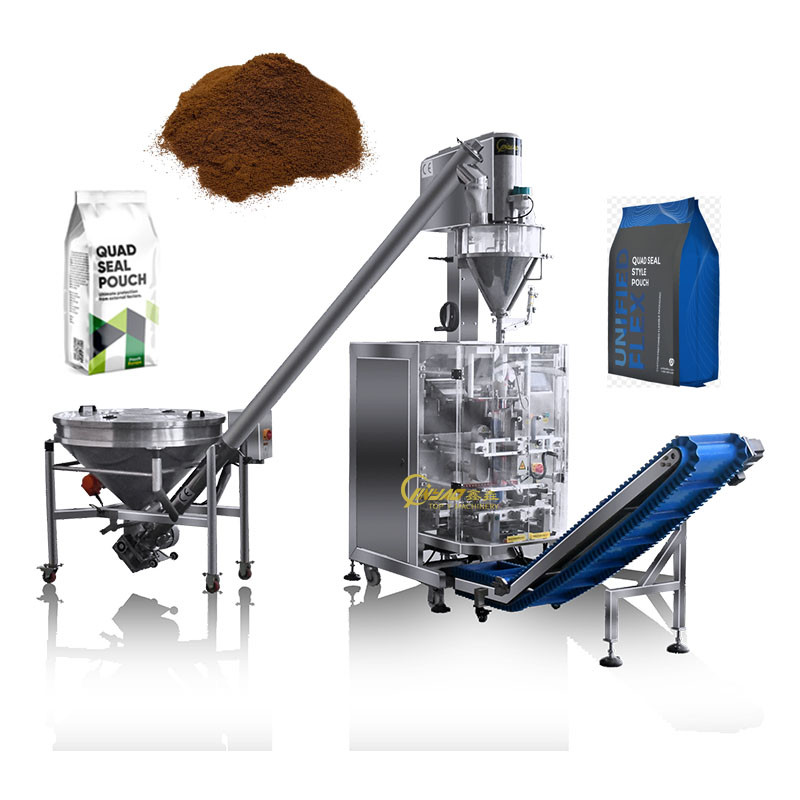
Vertical form-fill-seal machines form pillow, quad-seal, or gusseted bags directly from roll film at up to 80 bags per minute with integrated auger dosing. Film cost per bag is the lowest of any format, format changes are fast, and the sealed film tube itself is inherently dust-tight during filling.
Best for: high-volume flour, detergent, spice, and milk powder lines where cost per package matters most.
Route 2: Rotary Premade Pouch Machines (Doypack)
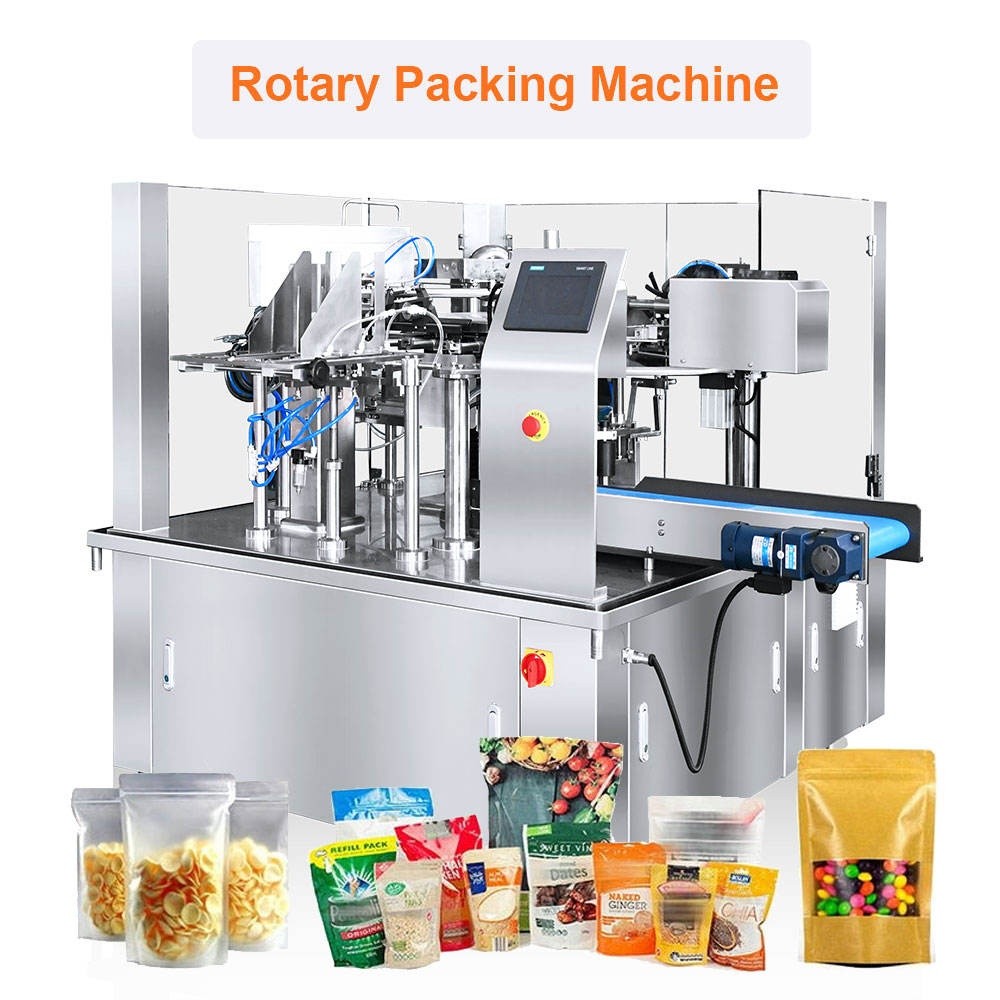
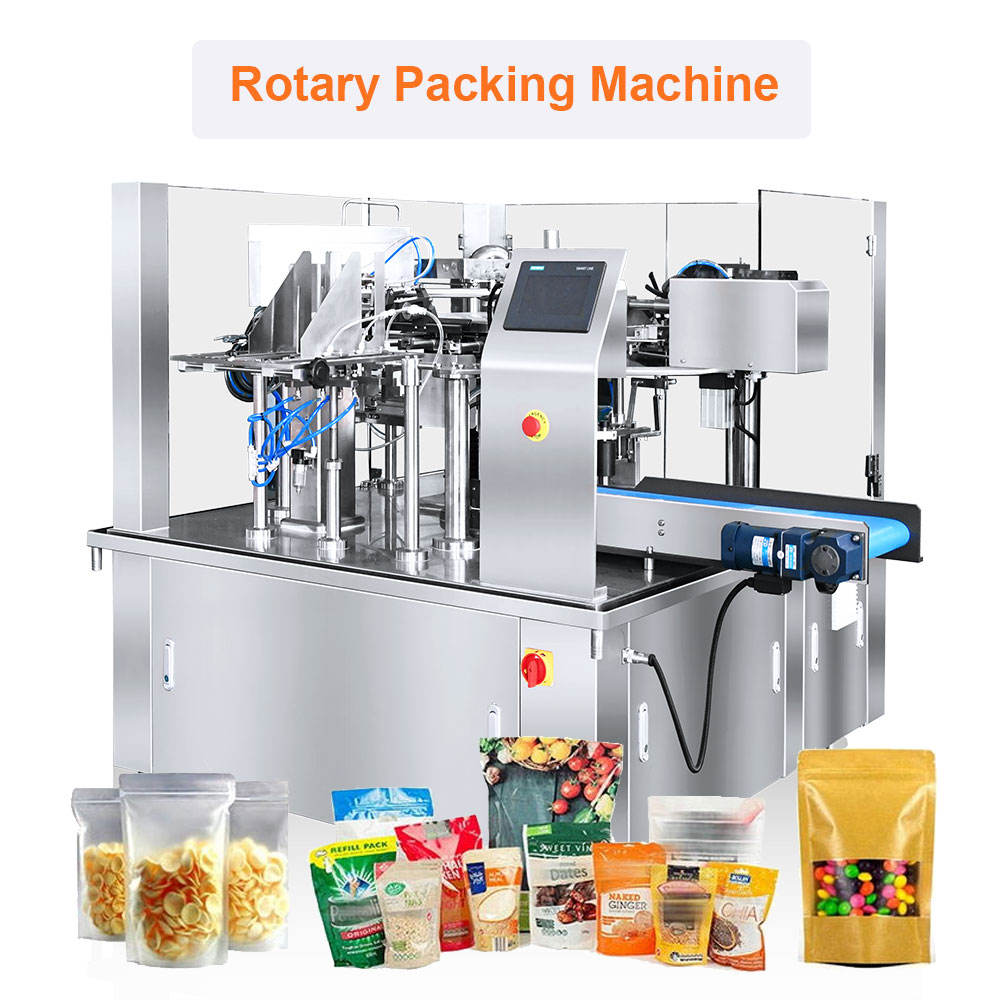
Rotary machines pick pre-made stand-up pouches, zippered doypacks, or flat-bottom bags from a magazine, open them under vacuum-assisted grippers, fill with dust-extracted nozzles, and seal at 30–60 bags per minute. You gain premium shelf presentation, zipper resealability, and easy multi-lane configurations with multiple filling heads.
Best for: protein powder, matcha, specialty coffee, infant formula, and any brand competing on packaging quality at retail.
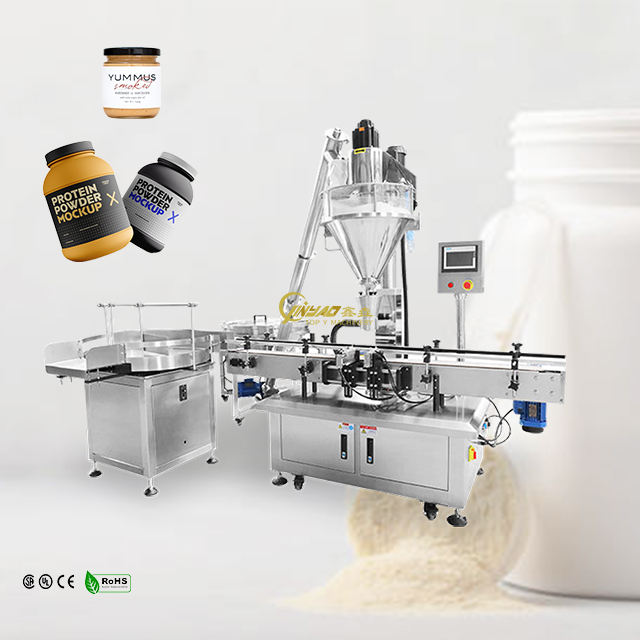
For rigid containers, auger or vacuum dosing heads pair with bottle and jar lines, followed by capping — a format still preferred for many supplement and pharmaceutical powders where a measured scoop or jar presentation matters. There is no single "best" route; the correct answer depends on your target consumer, film supply chain, and the hourly volume you actually need to ship.
Regulatory Compliance and Validation
Whatever the format, powder packaging equipment for food and pharma must be documented to a standard your auditor accepts. In practice, that means: food-contact materials complying with FDA 21 CFR and EU Regulation 1935/2004/10/2011; hygienic design aligned with GMP and HACCP principles, with SUS304 or 316L contact surfaces; CE conformity under the Machinery Directive; and, for pharmaceutical lines, machine documentation supporting IQ/OQ qualification protocols. Ask any supplier for their material certificates and FAT/SAT test reports before you place the order — a manufacturer who cannot produce them quickly will not survive your audit either.
What Does Automatic Powder Packaging Cost?
Budget honestly: a configured powder line is an engineered system, priced by what your powder demands from it. As a planning frame, entry-level automatic powder packaging machines for retail bags typically start in the low tens of thousands of US dollars; fully configured rotary doypack lines with vacuum feeding, nitrogen flushing, and check-weighing extend well beyond that; and turnkey projects including commissioning and operator training scale with integration scope.
The Giveaway Calculation Every Plant Manager Should Run
Take a 500 g powder product running 3,000 bags per day, with raw material valued at USD 4/kg. Overfilling by just 1% — invisible on any single bag — gives away 5 g × 3,000 bags = 15 kg of product daily, roughly USD 60 per day, or about USD 21,900 per year. Upgrading from manual or volumetric filling to a calibrated servo auger or net-weigh system frequently eliminates more value than the machine payment consumes. Dust recovery and cleaning-labor savings sit on top of that.
Frequently Asked Questions
What fill accuracy can an automatic powder packaging machine actually achieve?
For free-flowing food powders, a well-calibrated servo auger filler typically holds ±0.2% to ±0.5% of target weight; net-weigh systems reach ±0.1–0.2% at lower speeds. Achieving these numbers depends on stable bulk density, correct auger tooling for your particle size, and periodic re-calibration — ideally automated by check-weigher feedback.
How do you stop dust escaping during powder filling?
Dust control is layered: enclosed vacuum conveying to the hopper, downward filling nozzles with synchronized dust extraction, anti-static and grounded contact parts, and seal-zone suction or gas knives immediately before sealing. No single measure is sufficient — the combination is what keeps the sealing area and the plant air clean.
Should I choose a VFFS machine or a premade pouch machine for powder?
Choose VFFS when cost per bag and throughput dominate — it is the most economical high-speed route for flour, spices, and detergents. Choose a rotary premade pouch machine when shelf presentation, zipper resealability, or premium formats like flat-bottom bags drive sales — typical for protein, matcha, and specialty coffee brands. Many plants eventually run both.
Which powders are the most difficult to package automatically?
From our commissioning experience: extremely fine and adhesive powders (matcha, cocoa), hygroscopic powders that cake with humidity (whey isolate, some dairy blends), and powders with wide particle size distribution that segregate during transfer. All three are packageable — but they demand vacuum or enclosed dosing, humidity control, and material testing before final machine selection.
The Bottom Line
Automatic powder packaging succeeds or fails on two disciplines: engineering dust out of every transfer point, and holding dosing accuracy through every shift. Get those right and the line quietly pays for itself in recovered product, sealing reliability, labor savings, and audit readiness. Get them wrong and no amount of machine speed will compensate for dusty air, leakers, and giveaway. Test your real powder on real tooling, demand documented accuracy and compliance, and treat the feeding system as seriously as the filler itself.
Planning a Powder Packaging Line?
Tell us your powder, your target weight, and your desired bag format. The engineering team at TOP Y Machinery will recommend a dust-free, high-precision configuration — and can run your actual powder on test tooling before you commit. Free consultation, no obligation.