What Does "Lifetime Technical Support" Actually Include? Warranty, Spare Parts and Remote Service Explained
- Share
- publisher
- TOP Y Machinery
- Issue Time
- Nov 16,2026
Summary
TOP Y Machinery publishes a 2-year warranty plus lifetime technical support with 24/7 access, remote diagnosis through TeamViewer or Sunflower, and on-site installation with operator training for up to 5 people. One set of spare parts ships with every machine, sized for about two years of use; later overseas visits are charged at tickets, accommodation and US$150 per day. This guide separates what is included from what is charged, including the exclusions behind most warranty disputes.
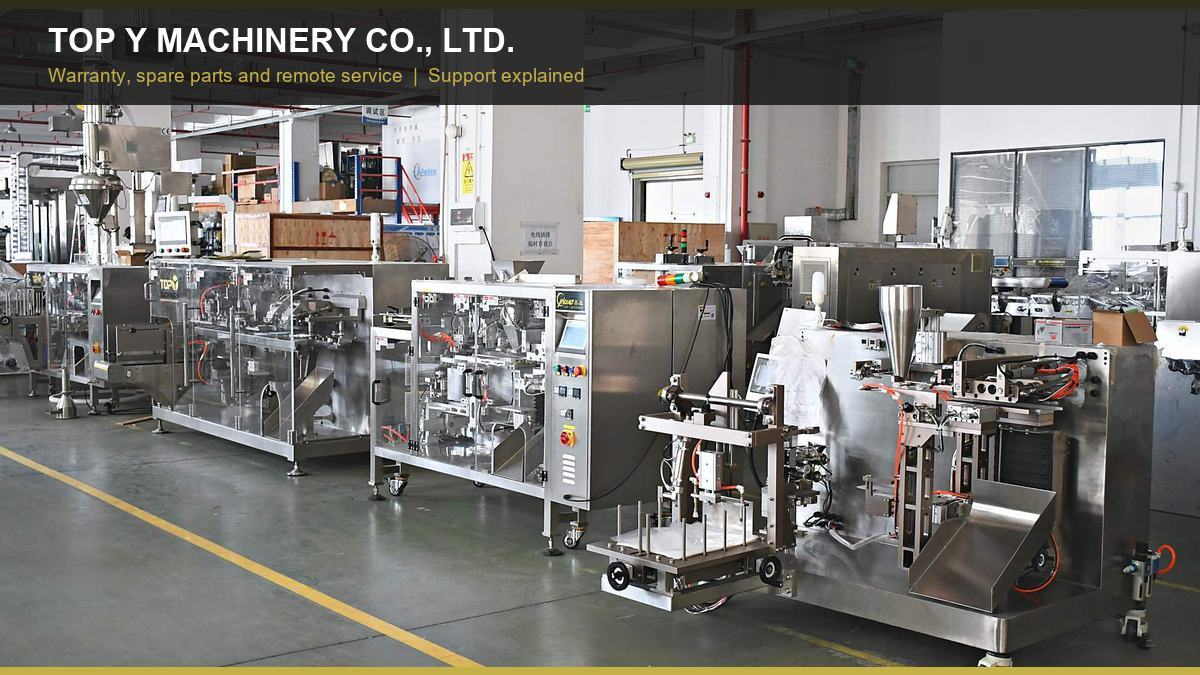
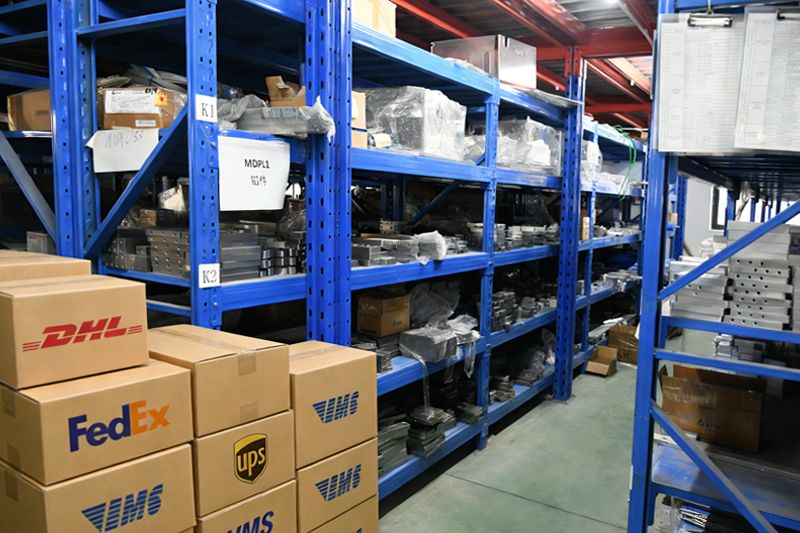
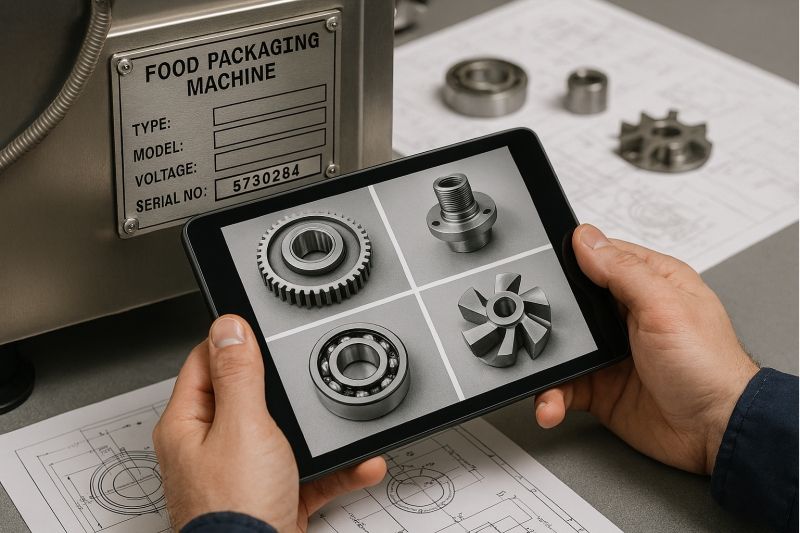
Warranty & after-sales · TOP Y Machinery The Short Answer: TOP Y Machinery publishes a 2-year warranty on its food packaging machines together with lifetime technical support, 24/7 access by telephone, email or online channels, and remote diagnosis through TeamViewer or Sunflower. Each new machine ships with one set of commonly replaced spare parts, and commissioning includes on-site installation plus operator training, typically 2–3 days for up to 5 operators. Overseas on-site visits after commissioning are chargeable: tickets, accommodation and a published daily service rate. Buyers comparing quotations see the phrase lifetime technical support on almost every packaging machine offer, and it means something different at each supplier. This page separates the parts that are written into a TOP Y order from the parts a buyer pays for later, using only what is already published on this website. Where a figure has not been published, it is not invented here: the answer says so and tells you which document to request. The table below is the fastest way to see what a TOP Y machine order actually contains. The middle columns matter more than the marketing headline: an item is only a commitment if it states a duration, a number of people and who pays for it. Two lines in that table are the ones buyers most often misread. First, the warranty and the lifetime support are different promises: the warranty is a two-year cost-bearing commitment on defects, while lifetime support is an open-ended promise of access and advice. Second, the on-site visit that is included in the order is the commissioning visit. A return visit years later is a service call, and the published rate is part of the quotation conversation rather than a surprise on the invoice. The published wording is narrow and therefore useful: TOP Y takes responsibility for manufacturing defects and for parts that fail because of their own quality. When a part fails, the part is sent back to the component supplier for assessment; if the assessment confirms the fault is TOP Y’s, a replacement is supplied free of charge. The same policy states the other side of the line just as plainly. If a part breaks through an accident, or through work carried out by a local technician, the customer is responsible for the cost of the replacement set. That is the standard split in machinery supply, and it is worth writing into the purchase order before the machine ships, because most warranty arguments are really arguments about cause rather than about coverage. What to document in the first month: the commissioning date, the serial number, the film and product used during acceptance, and photographs of the tooling kit contents as delivered. Every later claim about wear, output or spare parts starts from those four records. A claim without them turns into a negotiation about memory. Where the cause is genuinely unclear, the cheapest route is not a flight. Send photographs of the failed part, the machine serial number and the order number, and ask for a written assessment before anyone touches the assembly. The spare parts and warranty policy is published in full for exactly this reason. Commissioning is where a machine stops being equipment and becomes capacity. On a TOP Y line the visit covers installation, running the line on your own film and your own product, training your operators shift by shift, and then supervising production until your team runs the line unaided. The endpoint is not a calendar date; it is your operators producing to specification while the engineer only watches. What varies between projects is quantity, not principle: the number of days, the number of operators and the shifts covered are agreed with the order and confirmed against the drawing. The published planning figure is 2–3 days of training for up to 5 operators, which is a working assumption for a standard line rather than a cap on what the commissioning team will do if the plant runs three shifts. Training that lives only in someone’s memory leaves with that person. The handover pack is therefore written as documents a shift supervisor can use at the machine: Those records are written as named, dated and signed evidence so they can be filed against ISO 9001, HACCP, BRCGS or IFS requirements, and the format can be adapted to whatever documentation system your plant already audits against. Recorded video tutorials and written guides on the operator training page stay available to your team afterwards, which matters more for the second shift than for the first. Sessions run in English, Spanish or Russian, matching the three languages this site is published in; an interpreter can be arranged for other languages. Remote diagnosis is not a downgrade of on-site service; it is a filter in front of it. A technician connected through TeamViewer or Sunflower can read the same screens your operator reads, watch the machine cycle, and change parameters with you in real time. That removes the largest category of service calls — the ones caused by a setting rather than a broken part — without waiting for a visa, a flight and a hotel. The practical rule for a plant engineer: try the cheapest channel that can produce evidence. A photograph, a fault code and a two-minute video of the machine running will resolve more cases than a paragraph of description, and they shorten an on-site visit when one is finally needed. One set of easy-worn spare parts is packed with every machine, in the tooling kit, and the published statement is that the set is sized for about two years of use. That is the difference between a machine that stops for a week waiting for a courier and one that stops for an hour while a fitter walks to the cabinet. A sensible critical-spares list for a plant running one line covers the parts that stop production rather than the parts that are cheapest to add: heater bands and thermocouples, jaw inserts and sealing surfaces, belts and timing components, photocells and proximity sensors, and one set of the pneumatic valves used on the dosing station. Everything on that list should be either in the included kit or in the local store before the first production week ends. Two published figures make the maintenance budget concrete: a maintained machine is stated to last 8–10 years on the main frame and 5–8 years on electrical components, with routine maintenance costing 3–5% of the machine price per year. The gap between the two lifetimes is the part of the budget that is usually missing from a capital request: the frame outlives the electricals, so the servos, drives, sensors and controllers will be replaced at least once during the life of the machine. Applied to a published price band, the arithmetic is easy to check. A vertical form-fill-seal machine in the published US$8,000–25,000 range carries a routine maintenance budget of roughly US$240–1,250 per year at 3–5%. A rotary premade-pouch line in the published US$30,000–60,000 range carries roughly US$900–3,000. Those are planning figures for consumables, wear parts and scheduled checks, not a quote for an emergency repair. Budget line most plants forget: the annual maintenance percentage assumes the machine is maintained. Skipping the checklist does not save the 3–5%; it moves the cost into unplanned downtime and into the electrical replacement that arrives earlier than the 5–8 year band. No. The warranty is a 2-year commitment to repair or replace parts that fail through manufacturing defects. Lifetime technical support is an open-ended commitment to answer questions, diagnose faults and provide remote assistance for as long as the machine is in service. Support continues after the warranty ends; the cost of replacement parts does not stay with the supplier. Accidental damage, damage caused by work carried out by local technicians, and process consumables such as film, tape and ink. The published policy states that a part failing through its own quality is assessed by the component supplier and replaced free of charge if the fault is confirmed as TOP Y’s. No. Working with your team is part of the commissioning scope on every line: on-site during installation and commissioning, with recorded tutorials and written guides left behind afterwards. The variables agreed with the order are the number of days, the number of operators and the shifts covered — the planning figure is 2–3 days for up to 5 operators. The published terms are round-trip tickets, accommodation and US$200 per day for after-sales service. Ask for the visit to be quoted against a written scope, because the diagnosis may be resolved remotely before a visit is booked. Parts are normally held in stock and dispatched for 3–7 day delivery by DHL, FedEx, UPS or EMS. The clock starts when the part is correctly identified, which is why the photograph-plus-serial-number route is faster than a description. Remote control uses TeamViewer or Sunflower and needs a connection the plant permits. Where that is not possible, the fault-code sheet, the recorded tutorials and a video call from a phone at the machine cover most diagnosis; an on-site visit remains the fallback rather than the default. If this page has to survive being summarised into a purchase file, the four lines that matter are these: a 2-year warranty on manufacturing defects; lifetime support with 24/7 access and remote diagnosis; commissioning that includes installation, training for up to 5 operators and a spare parts set sized for about two years; and a published on-site rate of tickets, accommodation plus US$200 per day for later visits. Everything else — the number of training days, the shift pattern, the critical spares list — is agreed in writing against your own line.What Does “Lifetime Technical Support” Actually Include?
1. The Service Commitment, Item by Item
Item Included with the machine Duration or scope Who pays Machine warranty Yes 2 years TOP Y, for manufacturing defects Lifetime technical support Yes For the life of the machine No charge for advice and diagnosis 24/7 support access Yes Telephone, email, online channels Included Remote diagnosis and control Yes Through TeamViewer or Sunflower Included in support Installation and commissioning Yes On-site visit scheduled with the shipment Included in the machine order Operator training Yes 2–3 days, typically a few days on site, shift by shift Included in commissioning Standard spare parts set Yes One set of easy-worn parts, sized for about two years of use Included in the tooling kit Additional spare parts Optional 3–7 days dispatch when in stock Charged per part Overseas on-site service after commissioning Optional Scheduled engineering visit Round-trip tickets, accommodation and US$200 per day 2. Warranty Scope and the Exclusions That Cause Disputes
3. Installation, Commissioning and Operator Training
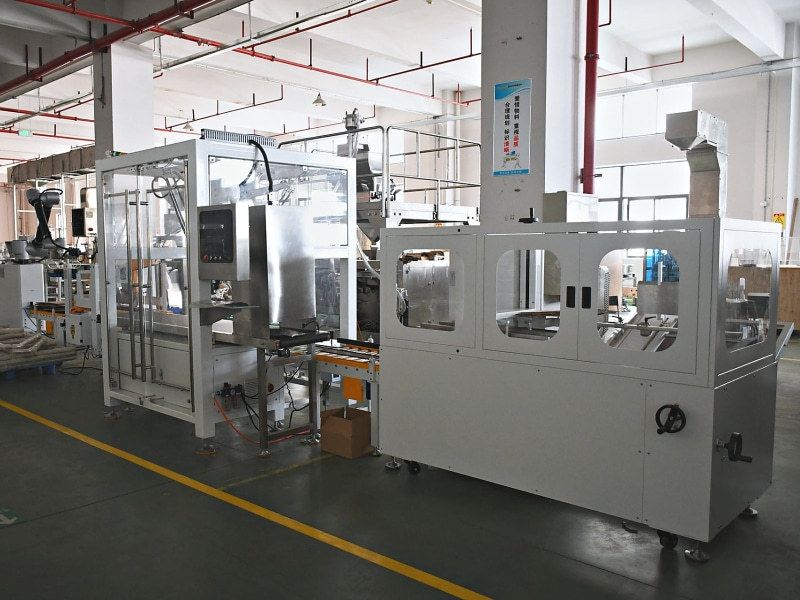
What Your Team Keeps After the Engineers Leave
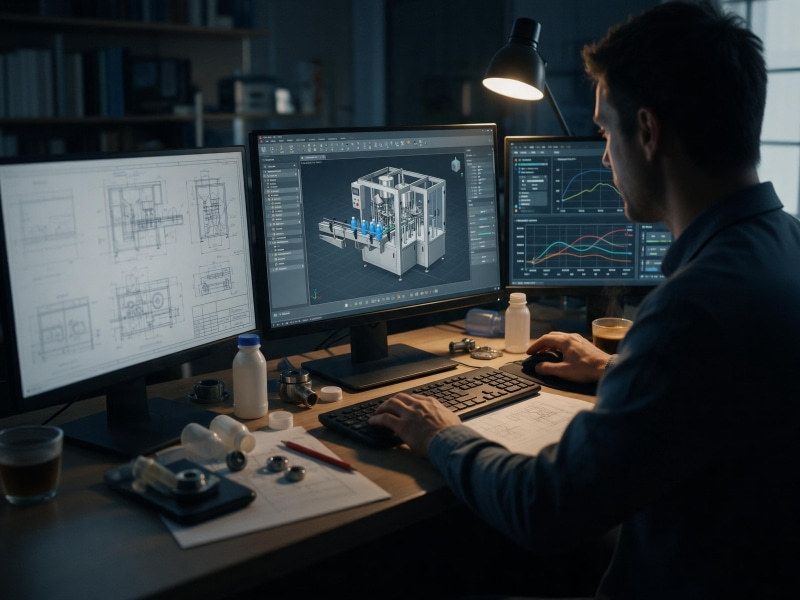
4. Remote Versus On-Site: What Can Actually Be Fixed Without a Flight
Situation First channel Why New film, new bag format, weights drifting Remote session Seal and dosing parameters are visible on the HMI and can be changed live Alarm or fault code on the panel Fault-code sheet, then remote Most alarms are cleared by the shift team once the code is identified Worn jaw, belt, heater or sensor Spare part dispatch plus remote guidance The part is in the included set or in stock, and replacement is a procedure, not a diagnosis Seal strength or leak failures Remote, using the seal integrity procedure Temperature, pressure and dwell are setpoints before they are hardware faults Mechanical damage or a crash On-site visit Assessment, straightening and re-alignment cannot be done through a screen New line, first installation On-site commissioning Included in the order and required for the warranty record 5. Spare Parts: What Ships With the Machine and What You Buy Later
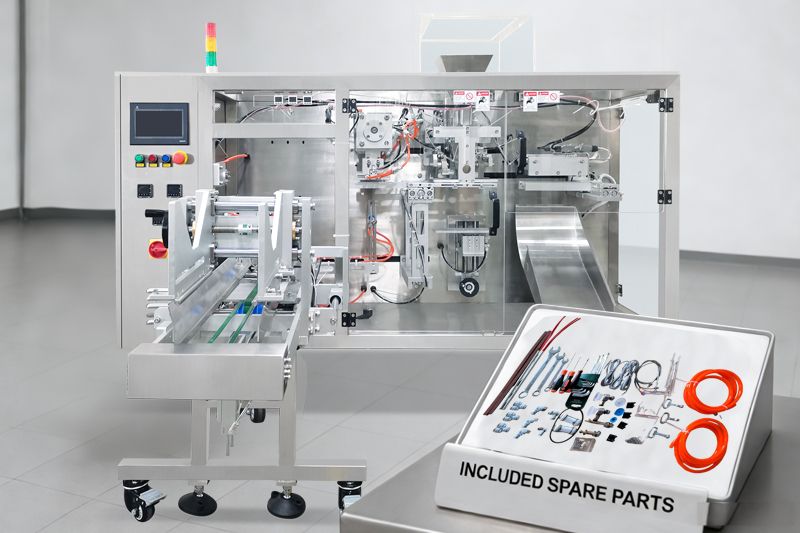
6. Service Life and the Annual Maintenance Budget
7. Questions Buyers Ask Before Signing
Is the 2-year warranty the same thing as lifetime technical support?
What is excluded from the warranty?
Is operator training an extra cost?
What does an overseas service visit cost after commissioning?
How quickly can a spare part arrive?
Can a machine be supported remotely if the local network is restricted?
8. The Short Version for a Procurement File